52 adults, waitlist-controlled
After 24 sessions, 27% of the neurofeedback group still met criteria for PTSD versus 68% of controls; effect sizes were comparable to established PTSD treatments.
Read the paper ↗
PTSD & trauma
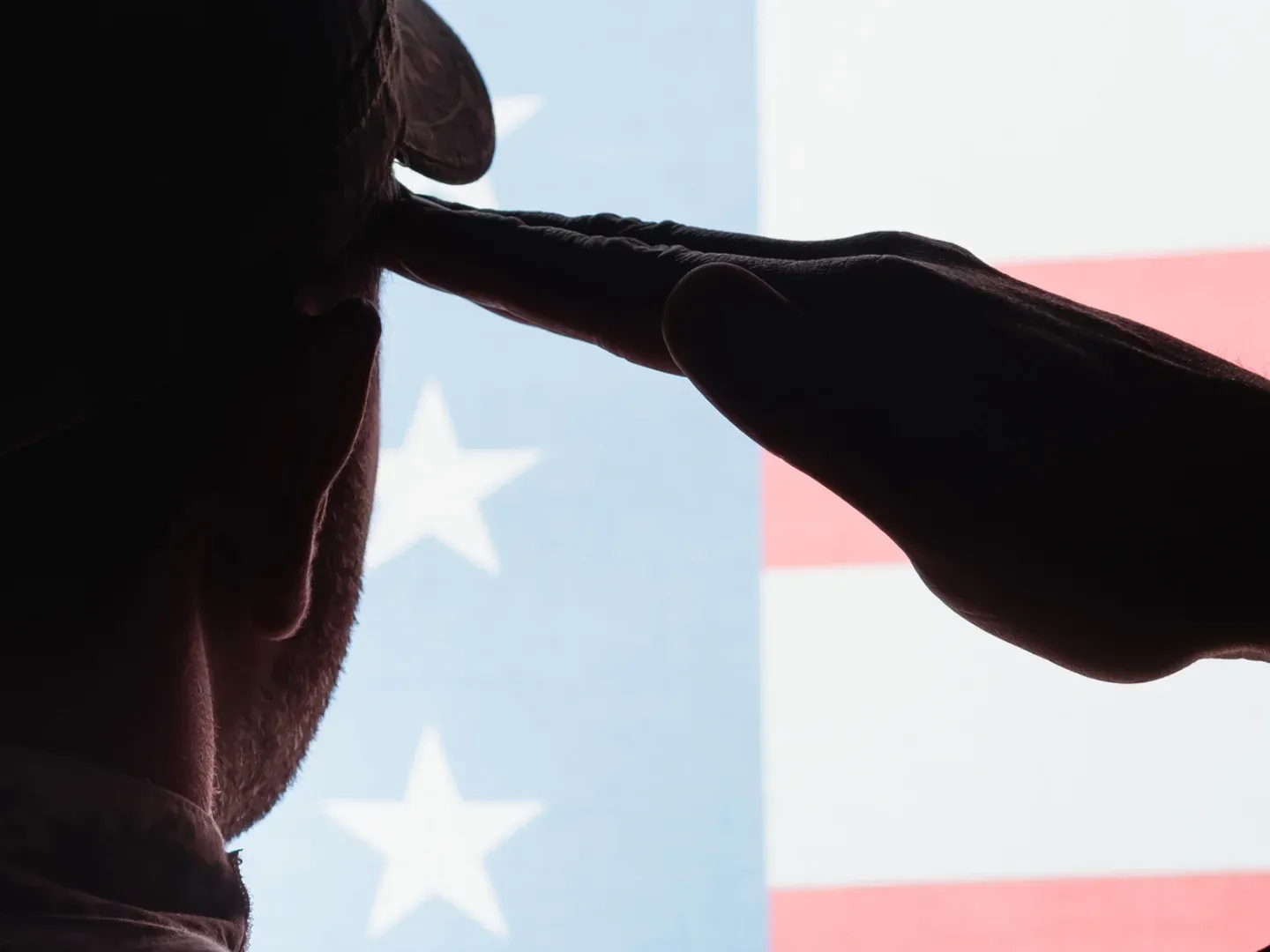
For veterans, first responders, survivors of ICU stays and accidents, and children after trauma. A qEEG brain map shows where the alarm is stuck on. Neurofeedback at home teaches the brain to stand down — without having to relive what happened.
Sound familiar?
Post-traumatic stress is a nervous system that did its job too well and never stood down. That pattern shows up in the brain’s rhythms — which means it can be trained.
Back to the wall, eyes on the exits, never quite off duty — even at a child’s birthday party.
Trouble falling asleep, nightmares, waking at 3 a.m. with your heart going.
Startling at small sounds, anger that arrives before you do, then guilt about it.
Numb, detached, avoiding the people and places that used to matter.
Racing heart, tight chest, clenched jaw — with no obvious reason in front of you.
After an accident, a hospital stay or a loss: clinginess, meltdowns, sleep that fell apart.
A different approach
Most PTSD care works on the thoughts and the memories, or blunts the alarm with medication. Neurofeedback works on the alarm itself.
What the map shows
In trauma, the brain’s calming alpha rhythm is often suppressed and fast, vigilant activity runs high, so the nervous system can’t shift from alert to rest. A brain map shows that pattern — where it is, how strong, and how it compares with a database of brains your age. No guessing, and no need to describe what happened to see it.
Neurofeedback then rewards the brain, moment by moment, each time it produces a calmer rhythm. Over weeks of practice the calm state becomes the one the brain returns to on its own. The randomized trials below trained exactly this rhythm.
The map records your brain’s electrical activity for under ten minutes, eyes closed and eyes open. It’s data, not an opinion about how you’re coping.
Protocols are chosen from what your map shows, not from a generic PTSD template, and adjusted at your weekly check-in as the pattern changes.
The evidence
Randomized controlled trials of EEG neurofeedback for post-traumatic stress — including two double-blind, sham-controlled studies — report meaningful symptom reduction and remission rates around 60%, with brain-imaging evidence of network connectivity moving toward normal. The authors of these trials call for larger ones.
After 24 sessions, 27% of the neurofeedback group still met criteria for PTSD versus 68% of controls; effect sizes were comparable to established PTSD treatments.
Read the paper ↗Remission of 61% in the neurofeedback group versus 33% with sham, with fMRI evidence that brain-network connectivity moved toward normal.
Read the paper ↗60% remission at three-month follow-up; reduced alpha rhythms, a known PTSD signature, normalized in the neurofeedback group.
Read the paper ↗Who we work with
We coordinate with therapists, psychiatrists and VA providers, and share the brain-map report with anyone you choose.
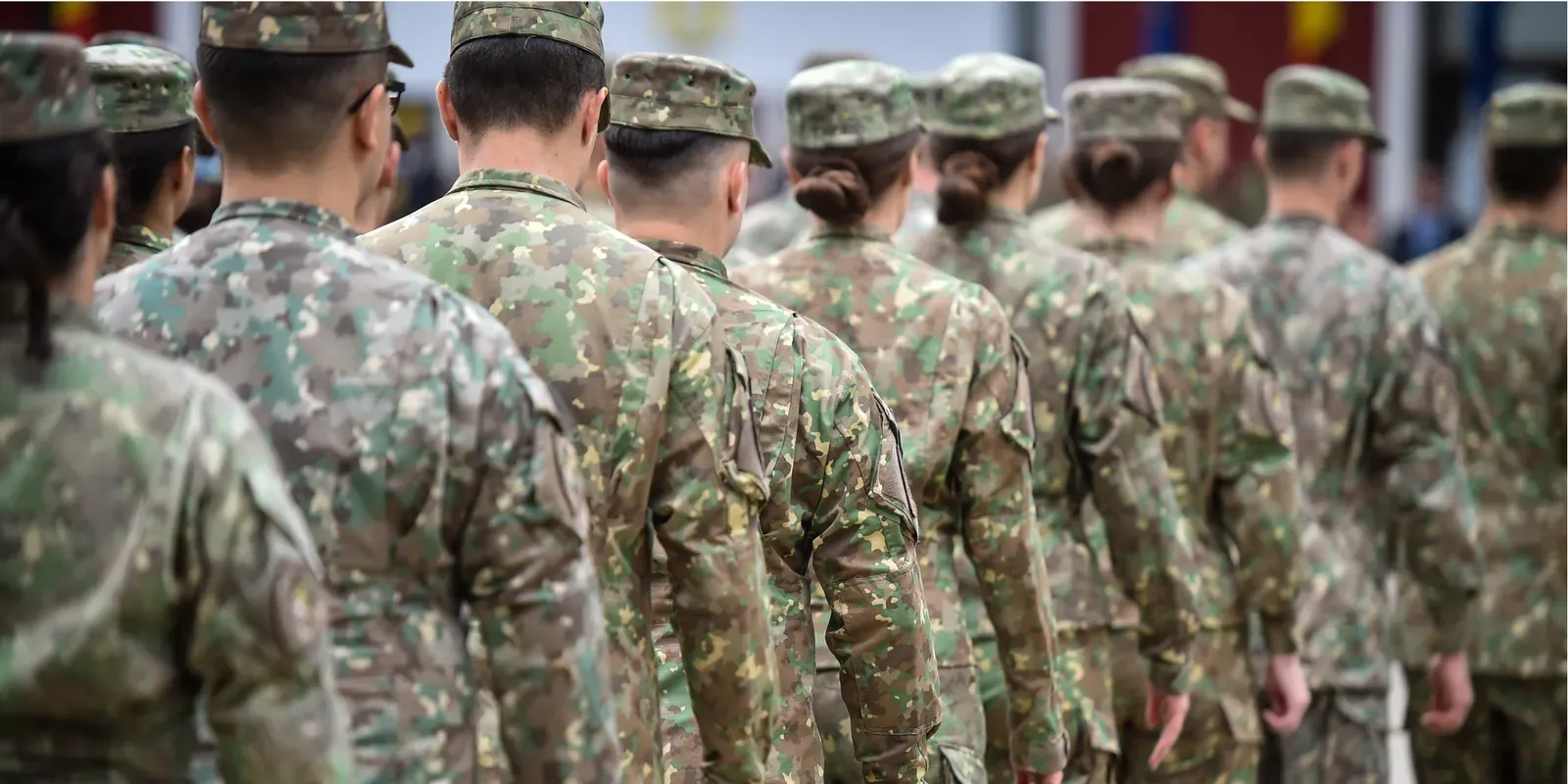
Combat and non-combat trauma, and the years of hypervigilance that follow.
Police, fire, EMS and dispatch — cumulative exposure, shift sleep and a nervous system that stays on call.
Survivors of intensive care, serious diagnoses or traumatic births, and the families who sat beside them.
Crashes, falls, violence — a single event that the body keeps replaying.
Kids who were there, or who lost someone, and haven’t been themselves since.
What a brain map is like
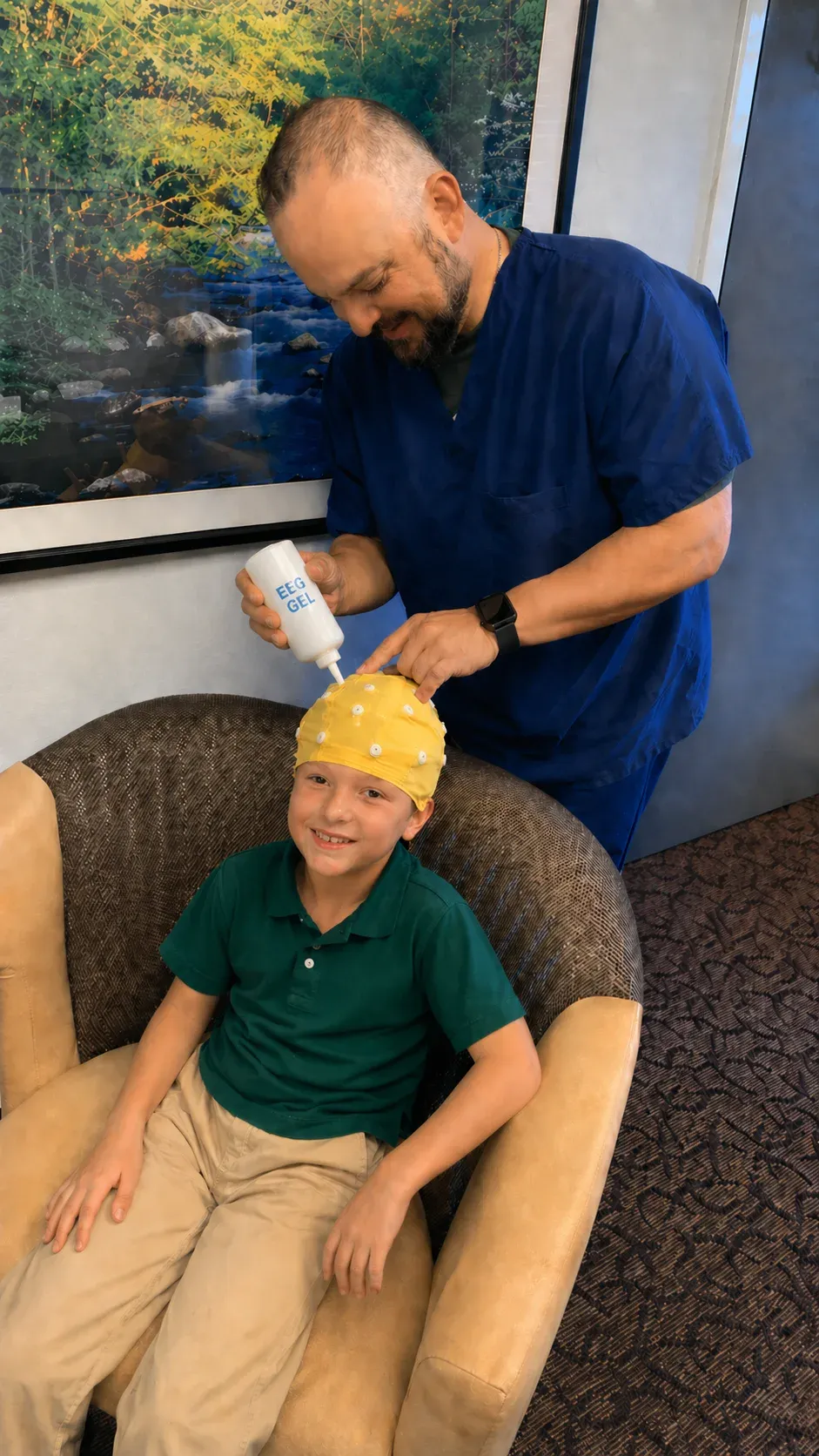
Here is the whole mapping visit. If a drive is a problem, or being in an unfamiliar office is, we can ship the mapping cap and run the recording remotely.
It looks like a swim cap with 19 small sensors built in. We adjust it until it’s comfortable.
A conductive gel helps each sensor read clearly. No needles — the applicator has a blunt tip and only touches the cap.
Light clips on the earlobes give the recording a reference point.
Eyes closed, then eyes open. Under 10 minutes of recording while your brainwaves appear live on screen.
What you take home
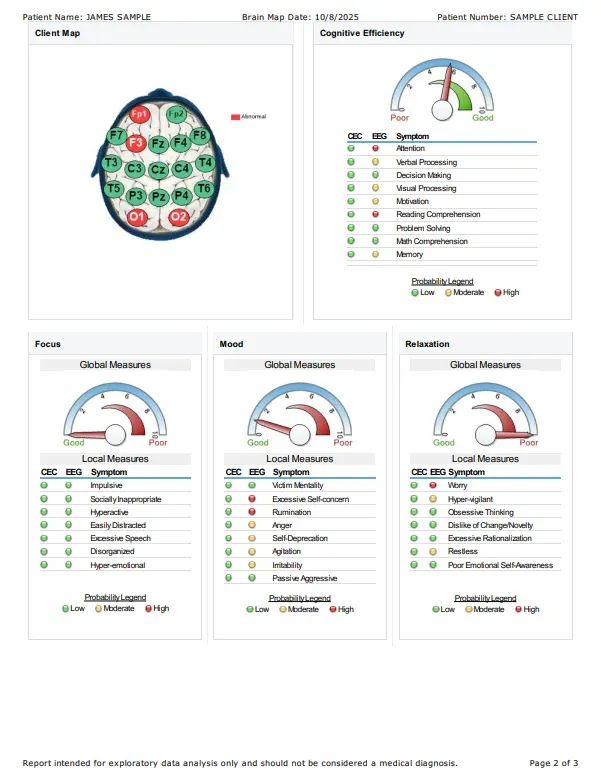
At your Report of Findings we walk through every page together. Here’s what one of them shows.
Nineteen sensor sites, each colored by whether your activity there sits in the typical range or outside it.
A single gauge for how efficiently the brain is working, with the everyday skills it feeds: attention, memory, processing, problem-solving.
Three gauges, each tied to real-world signs like distractibility, rumination or restlessness — so the numbers connect to what you actually see.
Not a diagnosis, and not an MRI. It’s a measurement of regulation that tells us where to train — and lets us measure change later.
“I’ve found joy again when I didn’t know I’d ever find it. Since Kerov, I’ve moved, found my dream job, and feel better than I thought was possible.”
Clinical expertise
Certified in qEEG and neurofeedback since 2002, Adrian has spent more than 28 years designing personalized brain-training programs. He works with veterans, first responders, ICU survivors and children after trauma, alongside their therapists and doctors, and leads every clinical program at Kerov™ Health.
Adrian E. Quevedo, MS, NEI
Co-Founder & Clinical Director
The process
Tell us what’s going on. We’ll explain how the program works and whether it’s a fit — no pressure, no cost.
A comfortable sensor cap records your brain’s electrical activity — in our office, or with a cap we ship to you. Painless, and under 10 minutes of recording.
We walk you through your map in plain English and lay out a personalized plan, timeline and cost.
Pick up your kit and train on your schedule while watching shows you like. We monitor progress and meet weekly on Zoom.
Good questions
No. Neurofeedback trains the brain’s rhythms directly, using feedback from a screen, so there is nothing to recount and no exposure to the memory. Many of our clients continue therapy or EMDR alongside the training; the two approaches work on different layers.
No. Neurofeedback works alongside your therapist, psychiatrist or VA care, never instead of them. We never ask anyone to change a medication; that decision stays with your prescribing doctor, and we are glad to share your brain-map report with your care team.
The largest randomized trial used 24 sessions over 12 weeks. Our program front-loads the training: five to seven short sessions a week at home during the Foundation Phase, with a weekly check-in, so the brain gets frequent, consistent practice.
Yes. Children train the same way, with a parent beside them at home, and most experience it as screen time with a few sensors on. The brain map is recorded in under ten minutes and shows where their nervous system is stuck on alert.
A brain map records your brain’s electrical activity using a soft cap with 19 sensors. The visit takes about 45 minutes and the recording itself is under 10. The result shows which areas are over- or under-active, so your training plan is built on data rather than guesswork. It’s painless and non-invasive — just come with clean, dry hair.
Yes. After your in-office brain map, all training happens at home with a clinic-grade kit we configure for you. We monitor your data remotely, adjust your protocols, and meet with you weekly on Zoom — so you get clinical supervision without the weekly commute.
Neurofeedback is a learning process, and like other learned skills the gains tend to hold. Life doesn’t stay still, though — a new job, a loss, a hard school year, an illness or a head injury can all shift things. That’s why many clients keep a maintenance option: a short tune-up when they need it, on their own schedule. It’s a choice, not a dependency.
No — and never change or stop a medication without your prescribing doctor. Neurofeedback can be done alongside medication. If your needs change over time, that’s a conversation between you and your doctor.
We don’t bill insurance. We accept HSA/FSA funds and offer financing through the Advance Care Card — interest-free for up to 15 months, with instant online decisions — so the program can be spread into monthly payments. You’ll see the complete cost at your Report of Findings, before you commit to anything. The first consult is free.How to apply →
Neurofeedback supports self-regulation; it does not diagnose, treat or cure PTSD, and it works alongside your medical and therapeutic care. If you are in crisis, call or text 988 (veterans: press 1). Never change a medication without your prescribing doctor.
Your next step
Book a free 30-minute consult by Zoom or phone. You don’t have to tell us what happened — only what you’d like to change.
Prefer to talk now? (407) 708-3200